 We were greeted with this sight when we awoke in Valentine, Nebraska...foggy and chilly...not very good weather for kayaking on the Niobrara River. So we shelved our plans for getting on the river.
 However, we drove out to the Fort Niobrara Wildlife Refuge to learn about this unique refuge and its history. It is located in the old Fort Niobrara Military Reservation, which was established in 1879 to keep peace between the settlers and the Sioux Indians and to control cattle rustlers and horse thieves. The army closed the fort in 1906, but used it to supply fresh horses for the cavalry until 1911.
In the early 1900s, President Theodore Roosevelt and private conservation organizations were becoming increasingly concerned with the exploitation of wildlife and their habitats on the Great Plains and elsewhere. As a result, an Executive Order was signed on January 11, 1912, establishing Fort Niobrara as a "preserve and breeding ground for native birds." Later that year, the Refuge's purpose was expanded to include the conservation of buffalo and elk herds representative of those that once roamed the Great Plains.
 As the fog cleared, we were pleased to see one of the 350 buffalo who live in the refuge. Sid said when the buffalo exhaled, he could see a large cloud of foggy breath. We were disappointed that I didn't capture that in any of my photos as we drove by. We also encountered a flock of turkeys and many different kinds of birds. What a lovely oasis in the midst of the Great Plains.
 One of our destinations was Smith Falls State Park, just 18 miles east of Valentine. We met Nicki in the park office. A part-time employee who grew up around the privately-owned park property, Nickie gladly shared information about the unique climate and native trees in the park, including Aspen trees and Paper Bark Birch trees. We hiked to spring-fed Smith Falls, the highest waterfall in the state of Nebraska. In fact, a recent university study of 20 miles of the Niobrara River catalogued nearly 200 waterfalls in the area...all of them spring-fed.
 On our way back through picturesque downtown Valentine, I captured this shot of detailed brickwork/carving on the front of the bank building...quite the eye-catcher.
 On our way out of Valentine, the road ran parallel to the Cowboy Trail, a trail from rails being developed along 321 miles across the state. This quarter mile bridge is really attractive.
 US Highway 83 took us through the famous Nebraska Sandhills, the largest sand dune formation in the Western Hemisphere, spanning nearly 20,000 square miles. Precipitation allowed grassland plants to take root in the shifting sand, eventually stabilizing the dunes and holding them in place. Another unique aspect of the Nebraska Sandhills is that it is resting on one of the largest aquifers in the world. The Ogallala Aquifer consists of 1 billion acre-feet of ground water and comes above the surface at the base of many dunes. Thus the Sandhills is a region of dry and sandy grassland dunes with many thousands of lakes and wetlands scattered between them.
 After passing near the geographical center of the continental United States, we arrived at Cawker City, Kansas, home of the World's Largest Ball of Twine! When we first started riding our motorcycle, we promised ourselves that we would stop to see roadside attractions as often as possible, including the world's largerst ball of twine. We were so excited to learn that we would be passing near this famous sight.
 Of course, I made reservations for two nights at the "Ball of Twine Inn." The Inn has only one room, a large space with a living room, kitchen, bathroom and bedroom. This homey little place is in downtown on Highway 24 and has its own courtyard with a pergola and several attractive birdhouses.
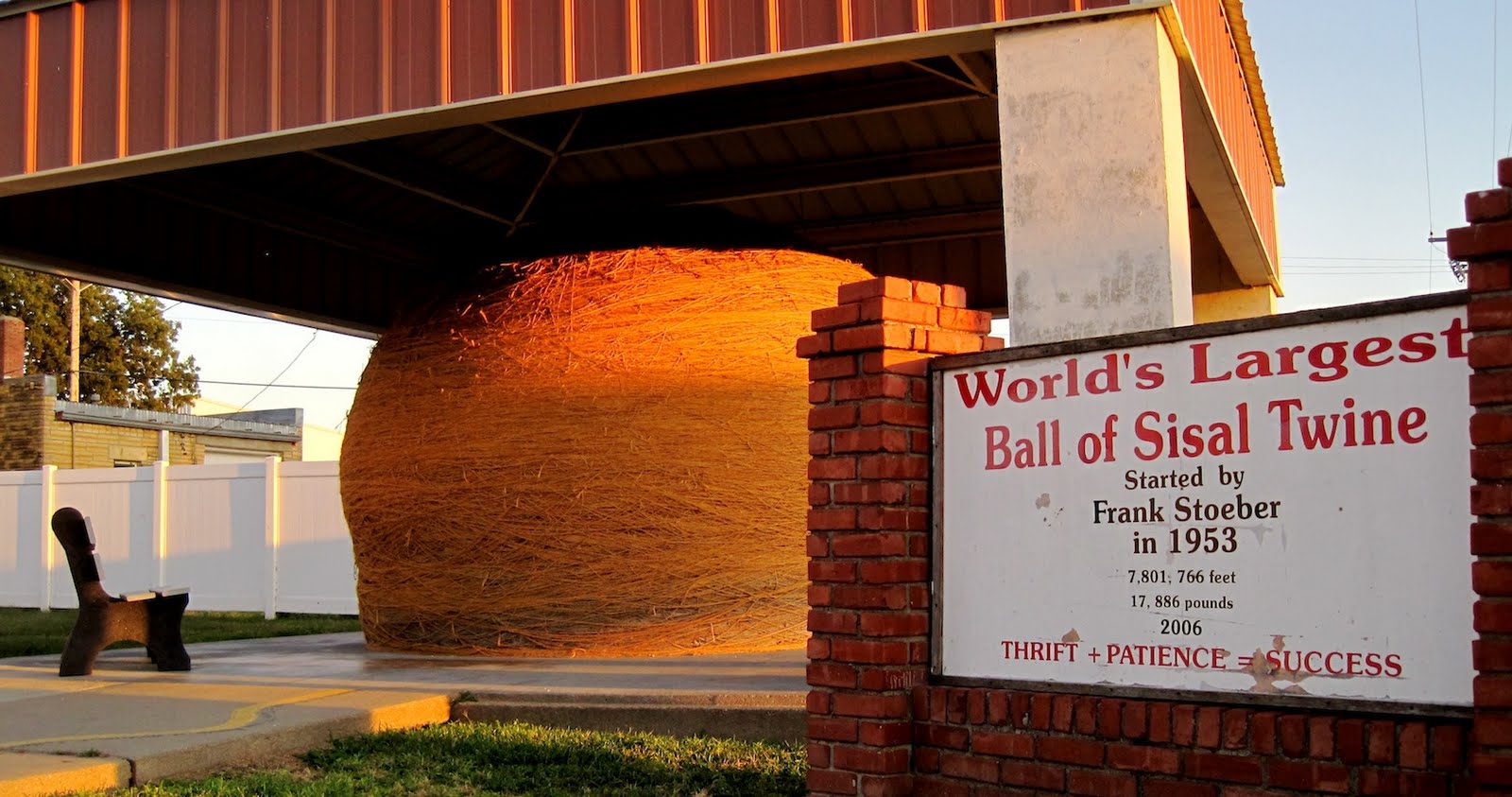 Naturally, I had to take a photo of the ball of twine during the golden hour just before sunset. Don't worry, I have more photos to share during Day 13's post. I know you can hardly wait!
 Here's a shot of Sid in the courtyard enjoying the evening and our special view of of the ball of twine just across the street! We were in heaven.


